

Sales tax holidays by state work like this: a sales tax holiday is a short period when a state does not charge state sales tax on certain items. Most holidays focus on back to school shopping, such as clothing, shoes, and school supplies. Some states also hold holidays for other items, such as energy-saving products or emergency supplies. The dates, the items, and the price limits differ by state, and they can change from year to year.
This post explains sales tax holidays by state and how holidays work in general, so you can plan and check the current rule for your state. It does not list 2027 dates, because those dates had not been confirmed from official state pages at the time of writing. It also does not present 2026 dates as upcoming. The 2026 holidays are past as of November 2026. If you see a 2026 date online now, treat it as a past example, not as a date you can use for a future purchase.
Sales tax holidays by state: what a holiday does and does not do
During a holiday, the state sales tax on a qualifying item is set to zero for that period. That does not mean every item in a shop is tax-free. Only items that fit the state’s list, and that are under the state’s price limit if one applies, are covered.
Local tax can also differ. In some states, local tax is also waived during the holiday. In other states, local tax still applies, or the local area can choose whether to take part. A receipt during a holiday should still be checked, because a state waiver does not always mean a zero total tax line.
Online sales can also be covered, if the sale is delivered into a state during the holiday and the item qualifies. The rule for online sales can differ by state, so check the state rule for delivery, not just the shop location.
Which items usually qualify
Back to school holidays usually cover clothing and footwear, school supplies, and in some states, computers and related items. Each state sets its own list, and the list can be narrow.
Clothing often has a price limit per item. For example, a state may cover clothing up to a set price per item, and charge tax on the full price if the item costs more. Other states may cover only the part under the limit. That detail matters, so read the state list before you assume a saving.
School supplies often have a lower price limit per item than clothing. Backpacks, pens, paper, and similar items are common, but the exact list differs. Computers, if covered, often have a much higher price limit, and accessories may or may not be included.
Items that are often not covered include jewellery, handbags in some states, sports equipment, and items bought for business use. A shop may advertise a tax-free weekend in broad terms, but the state list is the rule that counts.
How price limits work
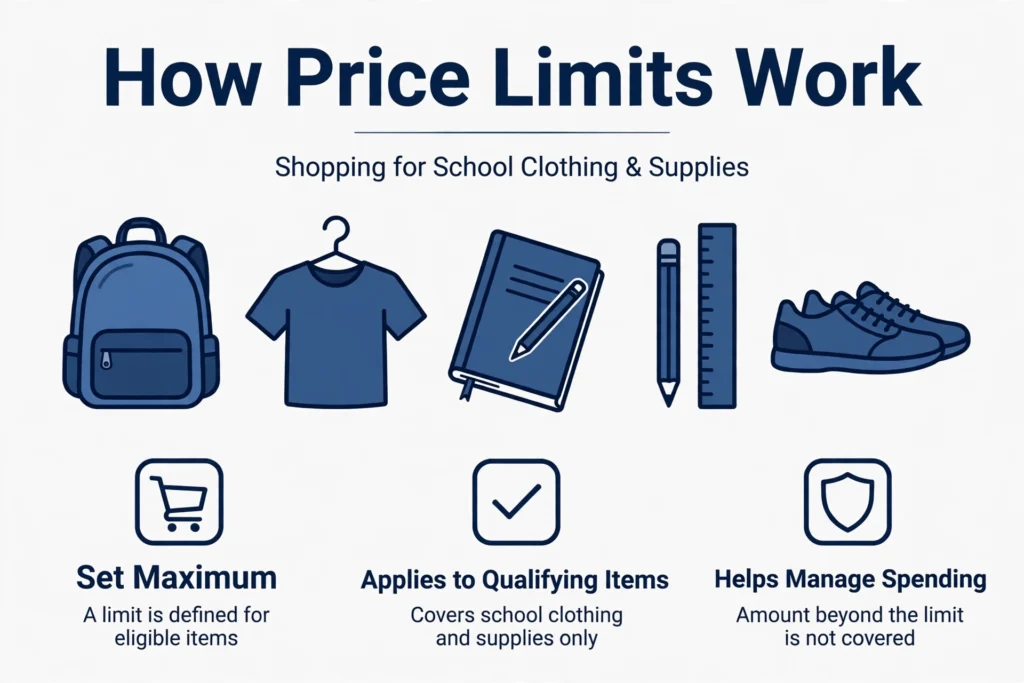
A price limit is a cap per item, not per basket, in most holiday rules. That means two items under the limit are both covered, even if the basket total is over the limit. It also means one item over the limit may be fully taxable, depending on the state rule.
Here is a simple example with made-up limits, to show the math only. Suppose a state covers clothing up to 100 dollars per item, and the sales tax rate outside the holiday is 8 percent. This rate and this limit are examples only.
You buy a shirt for 80 dollars and shoes for 90 dollars during the holiday. Both items are under the limit, so the tax during the holiday is 0 dollars. You pay 170 dollars in total.
Outside the holiday, the tax on the same two items would be 170 dollars times 0.08, which is 13.60 dollars. The total outside the holiday would be 183.60 dollars. The holiday saving in this example is 13.60 dollars.
Now suppose you buy a jacket for 120 dollars during the same holiday. The jacket is over the 100 dollar limit. In a state that taxes the full price when the limit is passed, the tax would be 120 dollars times 0.08, which is 9.60 dollars, and the total would be 129.60 dollars. In a state that taxes only the part over the limit, the tax would be 20 dollars times 0.08, which is 1.60 dollars, and the total would be 121.60 dollars. The same jacket can therefore give a different total in different states. Check the state rule for over-limit items before you buy.
How to plan for a holiday
Start with the state revenue department, not with a shop advert. Look for the holiday page for the current year, the list of qualifying items, the price limits, and the start and end dates and times. Note whether local tax is included, and whether online sales delivered into the state are covered.
Next, make a list of items you already plan to buy, and mark which ones are on the state list. Do not add items just because they are tax-free for a weekend. A saving on tax is small next to the price of an item you did not need.
Check the return rule too. If you buy an item during a holiday and return it later, or exchange it for a different item, the tax treatment can change. Read Sales Tax on Returns and Refunds for the general rule, and check the holiday page for any special return rule.
Keep the receipt. A holiday receipt should show the item, the price, and the tax charged, which should be zero for a qualifying item. If tax was charged on a qualifying item, ask the shop at the time, while the holiday is still running, because a later fix is harder.
Past 2026 holidays, and what to do for 2027
In 2026, several states held back to school holidays in July and August. Those dates are now past. They are useful only as a rough guide to the time of year when holidays often run, which is usually July and early August for back to school. They are not a guide to 2027 dates, items, or limits.
For 2027, do not rely on a 2026 list. States can add a holiday, drop a holiday, change the items, or change the price limits. Check the state revenue department in the months before the school year starts, and check again close to the purchase date, because a state can change a date late.
If your state does not hold a holiday, that does not mean you pay tax on everything. Normal exemptions still apply, such as exemptions for certain food or clothing in some states. Read What Items Are Exempt From Sales Tax for category exemptions that apply all year, not just during a holiday.
2026 back-to-school sales tax holidays by state
| State | 2026 dates | What qualified |
|---|---|---|
| Texas | Aug 7-9, 2026 | Most clothing, footwear, school supplies, and backpacks priced under $100 per item. |
| Florida | Jul 20-Aug 20, 2026 | Clothing, footwear, wallets, bags, backpacks, and diaper bags at $100 or less per item; certain school supplies at $50 or less; learning aids and jigsaw puzzles at $30 or less; personal computers and certain accessories at $1,500 or less, for noncommercial home or personal use. |
| Tennessee | Jul 31-Aug 2, 2026 | General apparel at $100 or less per item; school and art supplies at $100 or less per item; computers for personal use at $1,500 or less. |
| Virginia | Aug 7-9, 2026 | Qualified school supplies at $20 or less per item; qualified clothing and footwear at $100 or less per item. Computers are not covered. |
| Missouri | Aug 7-9, 2026 | Clothing at $100 or less per item; school supplies at $50 or less per purchase; computer software at $350 or less; personal computers at $1,500 or less; graphing calculators at $150 or less. |
| South Carolina | Aug 7-9, 2026 | School supplies, computers and technology, clothing and footwear, and certain bed and bath items. No dollar cap on any category. |
| Alabama | Jul 17-19, 2026 | Clothing at $156 or less per item; computers, computer software, and school computer supplies at $1,173 or less per purchase; school supplies and art supplies at $78 or less per item. The holiday removes the 4% state sales tax only; local taxes may still apply. |
| Ohio | Aug 7-9, 2026 | Clothing at $75 or less per item; school supplies at $20 or less per item; school instructional materials at $20 or less per item. The broad $500-and-under holiday from 2024 and 2025 did not apply in 2026. |
All dates above are past 2026 dates. 2027 dates are not yet confirmed. Sources checked November 6, 2026.
Checklist before you buy during a holiday
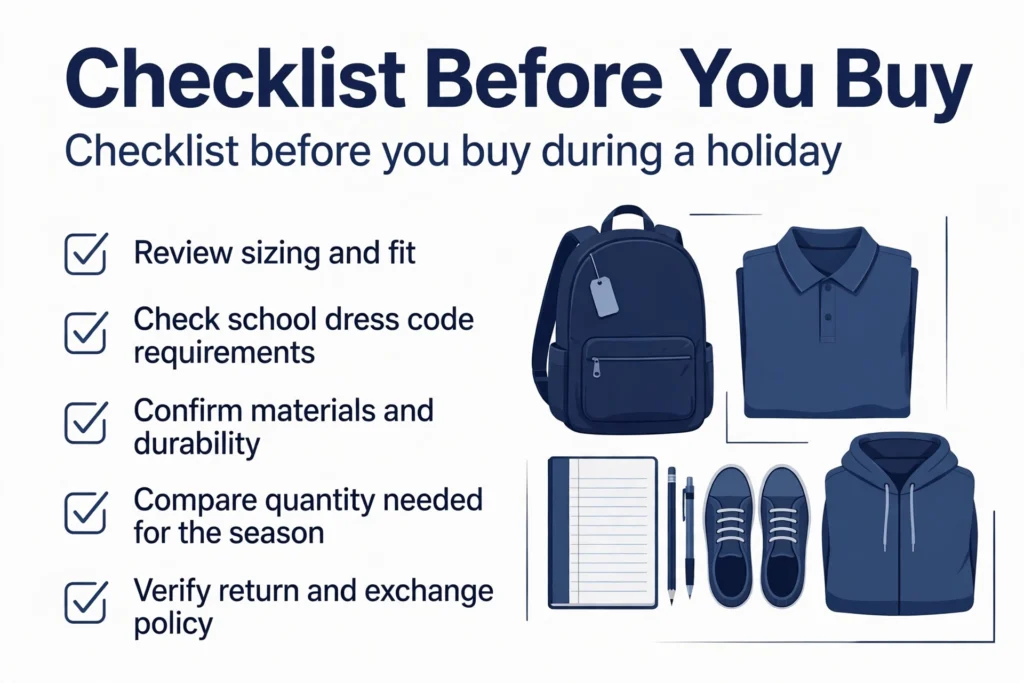
- Confirm the holiday dates and times for the current year, from the state revenue department.
- Check the item list for your state, item by item.
- Check the price limit per item, and the rule for items over the limit.
- Check if local tax is also waived.
- Check if online delivery into the state is covered.
- Keep the receipt and check the tax line at the time of purchase.
Frequently asked questions
Are sales tax holidays the same in every state?
No. Dates, items, price limits, and local tax treatment all differ by state. Some states hold no holiday at all. Check your state revenue department for the current year.
Do tax-free weekends cover online purchases?
They can, if the item qualifies and the sale is delivered into a state during the holiday. The rule for online sales differs by state, so check the state holiday page for delivery rules.
What happens if an item costs more than the price limit?
It depends on the state. Some states tax the full price. Others tax only the part over the limit. Check the state rule before you buy, because the total can differ by that detail alone.
Can I buy items in bulk during a holiday and still save tax?
Only items that qualify, and only up to the state rules for quantity, if any. A holiday is not a general tax waiver for a whole basket. Items that do not qualify are still taxed.
Are 2026 holiday dates still valid?
No. As of November 2026, the 2026 holidays are past. Do not use a 2026 date list for a future purchase. Check the 2027 dates from the state revenue department when they are published.
What should I do if tax was charged on a qualifying item?
Ask the shop at the time, during the holiday, and keep the receipt. A fix is easier while the holiday is running than after it ends.
This post gives general information only. It is not tax advice. Tax rules change, and they differ by state. Check the holiday page for your state, for the current year, before you buy.