

Dropshipping is a model where a retailer sells a good, but a supplier ships that good direct to the buyer. The retailer never holds the stock. Print on demand is a close model, where a print partner makes and ships a custom item, such as a shirt or a mug, after a buyer orders it from the retailer’s shop. That is the dropshipping sales tax question in short: who collects tax, and when.
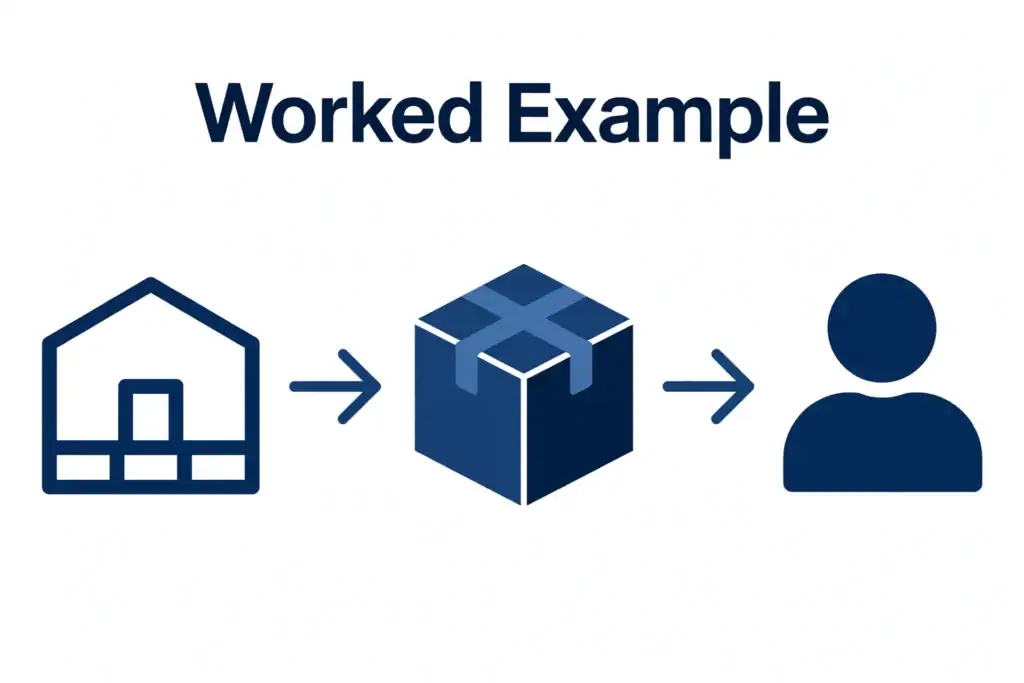
Dropshipping sales tax turns on three roles, not on who holds the stock. The retailer sells to the buyer. The supplier sells to the retailer. The buyer receives the goods. Tax is usually due once, on the retail sale to the buyer, when that sale is taxable and the seller must collect tax in the buyer’s state. The wholesale sale from supplier to retailer is usually not taxed at that stage, if the retailer gives a valid resale certificate. This post explains that flow, with a worked example, and shows where it can go wrong.
The three roles
The retailer is the seller to the final buyer. The retailer sets the retail price, takes the buyer’s payment, and is usually the seller who must collect tax on the retail sale, when the normal rules apply.
The supplier is the seller to the retailer. The supplier makes or holds the goods and ships them to the buyer on the retailer’s behalf. The supplier’s sale to the retailer is a wholesale sale, if the goods are bought for resale.
The buyer is the final user. The buyer pays the retail price plus tax, when tax applies, and receives the goods from the supplier.
Stock location does not decide tax. A retailer with no warehouse can still have a duty to collect tax in a buyer’s state, if the retailer meets that state’s nexus test. A supplier with a warehouse in a state can create a nexus link for the retailer in some cases, because stored goods can count as a physical presence. That point is covered in more detail in Online Sales Tax and Economic Nexus.
Dropshipping sales tax: the normal tax flow
In the normal flow, the steps are:
- The buyer orders from the retailer and pays the retail price plus tax, when tax applies.
- The retailer orders the same good from the supplier at a wholesale price.
- The retailer gives the supplier a resale certificate, so the supplier does not charge tax on the wholesale sale.
- The supplier ships the good direct to the buyer.
- The retailer sends the tax collected from the buyer to the buyer’s state, on the retailer’s own return.
Tax is paid once, at the retail stage. The wholesale stage is not taxed, because the good will be taxed when sold to the final buyer.
For how tax treats the trip to the buyer, see Shipping and delivery sales tax.
If the retailer does not give a resale certificate, the supplier may charge tax on the wholesale sale. That does not replace tax on the retail sale. It can lead to tax being paid twice, once at wholesale and once at retail, unless the retailer can claim a refund or a credit under the state rule. That is why the resale certificate step matters so much in dropshipping.
For resale certificates, read Sales Tax Exemption Certificate. Keep a copy of each certificate you give to a supplier, with the date and the supplier name.
A worked example with checked math
Suppose a retailer sells a shirt to a buyer for 50 dollars. The supplier charges the retailer 20 dollars wholesale for that shirt. Suppose the sales tax rate in the buyer’s state is 8 percent. This rate is an example only.
Retail sale, with a valid resale certificate given to the supplier:
- Wholesale sale: 20 dollars, tax 0 dollars, because of the resale certificate. The retailer pays 20 dollars to the supplier.
- Retail sale: 50 dollars, tax 50 dollars times 0.08, which is 4 dollars. The buyer pays 54 dollars in total.
- The retailer sends 4 dollars of tax to the buyer’s state. The retailer keeps 50 dollars of retail price, minus 20 dollars wholesale cost, which is 30 dollars before other costs.
Retail sale, without a resale certificate, if the supplier charges tax on the wholesale sale at the same example rate:
- Wholesale sale: 20 dollars, tax 20 dollars times 0.08, which is 1.60 dollars. The retailer pays 21.60 dollars to the supplier.
- Retail sale: 50 dollars, tax 4 dollars, as above. The buyer pays 54 dollars.
- Total tax paid in the chain is 1.60 dollars plus 4 dollars, which is 5.60 dollars, instead of 4 dollars. The extra 1.60 dollars is tax paid at wholesale that should not have been paid, if a valid resale certificate had been given.
That example shows why a missing certificate is not just a paper problem. It changes the amount of tax paid in the chain.
Print on demand: what is different
Print on demand follows the same flow, with one extra point. The print partner makes the item after the order, so the item does not exist as stock before the sale. That does not change the tax roles. The retailer still sells to the buyer. The print partner still sells to the retailer at wholesale, or provides a production service, based on the contract.
Read the contract with your print partner. Some partners treat their charge as a wholesale sale of goods. Others treat it as a production service. The tax treatment can differ based on that contract and on the state rule. If the partner charges tax on its fee, ask why, and check if a resale certificate or a service rule applies. Do not assume the partner’s tax charge is correct without checking the contract and the state rule.
If you sell print on demand through a marketplace, the marketplace facilitator rule can also apply. Read Marketplace Facilitator Sales Tax for that split, and keep marketplace print sales apart from direct print sales.
Supplier location and nexus
A supplier’s warehouse can matter for nexus. If a supplier holds your stock in a state, or ships from a state on a regular basis, that can create a physical nexus link for you in that state, in some state rules. The same can apply if a print partner has a production site in a state where you sell.
That does not mean every supplier location creates nexus for every retailer. It means you should ask each supplier where goods are stored and shipped from, and note those states. Then check the nexus rule for each of those states, as well as for states where you have many buyers.
If a supplier ships from a state where you have no nexus, that alone does not set the tax state. If the buyer is in another state where you do have nexus, the tax duty is usually based on the buyer’s state, not the supplier’s state. Keep the buyer location as the key fact for the retail sale, and keep the supplier location as a separate nexus fact.
Common mistakes
One mistake is to assume the supplier collects tax for the retailer. A supplier who ships direct to a buyer does not usually collect retail tax for the retailer, unless the supplier is also acting as a marketplace facilitator for that sale. The retailer must collect retail tax itself, when the rules apply.
A second mistake is to give no resale certificate, or a certificate from the wrong state. A certificate must fit the supplier’s state and the sale. Check the supplier’s state form before you send it.
A third mistake is to treat a wholesale price as the taxable retail price. Tax on the retail sale is based on the retail price paid by the buyer, not on the wholesale price paid to the supplier. Using the wholesale price will understate the tax.
A fourth mistake is to mix dropshipping sales with marketplace sales in one total, with no split. Keep dropshipping direct sales, marketplace sales, and any in-stock sales apart, by state and by period.
Checklist for dropshippers
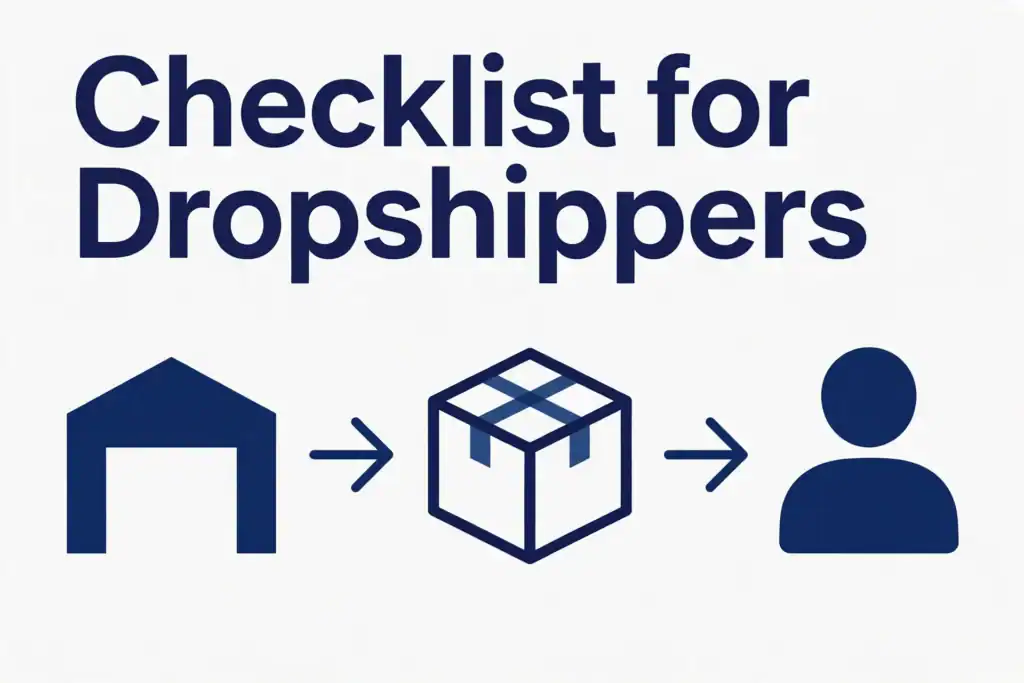
- Give each supplier a valid resale certificate, for the supplier’s state, before the first wholesale order.
- Keep a copy of each certificate, with the date given and the supplier name.
- Collect tax on retail sales to buyers, when the buyer’s state rule and your nexus require it.
- Base retail tax on the retail price, not the wholesale price.
- Note supplier storage and shipping states, for nexus checks.
- Split direct dropshipping sales from marketplace sales on every return.
- Keep supplier invoices, retail invoices, and shipping records together, by order, so a sale can be traced from buyer to supplier.
Dropshipping Resale Certificate Checklist
- Give your supplier your resale certificate — the supplier needs it to document the sale as wholesale.
- Register where you have nexus before you collect tax there.
- Keep certificates on file for every supplier and every state where you claim resale.
- Check the ship-to state — the delivery state’s rules decide whether tax is due on that sale.
- Do not use a resale certificate for items you buy for your own use.
Official source: Washington Department of Revenue — Drop Shipments
Dropshipping rules by state
| State | Rule | Official source |
|---|---|---|
| Washington | The supplier is not required to collect retail sales tax even if it delivers to the Washington customer, if it documents the wholesale sale with a Reseller Permit, SST Exemption Certificate, or MTC Exemption Certificate from the retailer. Without one, it must collect and send in the sales tax. | Washington Department of Revenue – Drop Shipments |
| California | A drop shipper that is a retailer doing business in California is treated as the retailer and is liable for tax on the retail selling price paid by the California consumer. The presumption is overcome by accepting a timely resale certificate in good faith (Regulation 1706). | CDTFA – Regulation 1706 |
| Texas | A resale certificate may be accepted from the out-of-state retailer even if the Texas retailer ships or delivers the taxable item directly to a recipient inside Texas (34 TAC 3.285(d)(2)). | 34 TAC 3.285 |
| New York | Two sales take place: third-party seller to primary seller, and primary seller to customer. When the primary seller is New York-registered, it gives Form ST-120 to the third-party seller, collects tax from the customer, and sends it in. | NY Tax Bulletin ST-190 – Drop Shipments |
| Florida | A Florida manufacturer must collect Florida sales tax on a sale to an unregistered out-of-state dealer when it delivers the goods to the Florida customer (Rule 12A-1.091(10); TAA 94A-060). An unregistered out-of-state buyer cannot give a Florida Certificate of Resale to a dealer (TAA 07A-043). These advisements bind only the taxpayer who asked for them. | Florida DOR – TAA 94A-060 (PDF) |
| Ohio | Resale is documented with Form STEC B (Blanket Exemption Certificate) or STEC U (Unit Exemption Certificate). Ohio does not issue resale numbers; the buyer uses its FEIN on the MTC/SST certificate form. | Form STEC B / Form STEC U |
| Pennsylvania | A drop shipper with Pennsylvania nexus was required to collect sales tax on its drop shipment unless it had obtained a properly completed exemption certificate (Form REV-1220; Letter Ruling SUT-99-134). | Form REV-1220; Letter Ruling SUT-99-134 |
| Illinois | The Illinois company, as a seller required to collect Illinois tax, must either charge tax or document the exemption, and must obtain a valid Certificate of Resale (Form CRT-61) from the purchaser (86 Ill. Adm. Code 130.225). | 86 Ill. Adm. Code 130.225 |
Frequently asked questions
Who pays sales tax in dropshipping, the supplier or the retailer?
In the normal flow, the final buyer pays tax on the retail sale, and the retailer collects it for the buyer’s state. The wholesale sale to the retailer is usually not taxed with a valid resale certificate.
Do I need a resale certificate for each supplier?
Yes, in practice. Each supplier needs a certificate that fits its state and its sale to you. Keep a copy for each supplier, with the date given.
What if my supplier charges me tax on a wholesale order?
Ask why tax was charged, and check if a resale certificate was given and accepted. If tax was charged in error, ask about a refund or credit under the state rule. Do not skip tax on the retail sale.
Does print on demand change the tax answer?
The roles stay the same. The retailer sells to the buyer, and the print partner sells or provides a service to the retailer. Check the partner contract and the state rule for that case.
Can a supplier warehouse create nexus for me?
It can, in some state rules, because stored goods can count as a physical presence. Ask suppliers where goods are stored and shipped from, and check the nexus rule for each of those states.
This post gives general information only. It is not tax advice. Tax rules change, and they differ by state. Check the resale and dropshipping rules for the buyer’s state before you ship.