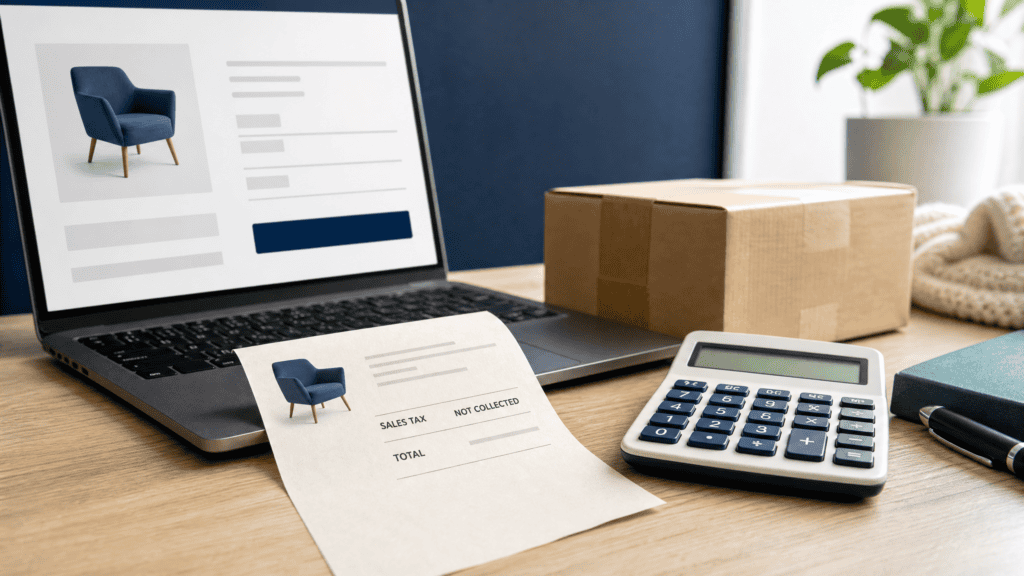
Many people first hear about use tax after buying something online or from an out-of-state seller. The receipt may show no sales tax, but the item is later brought home, stored or used in a state where the purchase would normally be taxable. That is the situation use tax is designed to address.
Use tax is generally a tax on taxable goods, and in some states certain services, when sales tax was not paid at the time of purchase. It is linked to the place where the item is used rather than only the place where the seller is located. Washington describes use tax as applying when sales tax was not paid at purchase and explains that a transaction is generally subject to either sales tax or use tax, not both.[1]
The exact rule depends on the state, the item, the buyer and the reason the item was purchased. This article explains the basic idea, common examples and the questions to check before taking action. It is general information, not a filing decision for a particular state.
Table of Contents
ToggleUse Tax in Plain English
Sales tax is usually collected by a seller when a taxable purchase is made. The seller adds the tax to the price, collects the money and sends it to the state or local tax authority. Use tax addresses a similar taxable purchase when the seller did not collect the tax.
A simple example is an online purchase shipped to your home. The seller may be located in another state and may not have collected tax for the delivery location. If the item is taxable where you live and no valid exemption applies, your state may expect use tax to be reported or paid.
Use tax does not mean a buyer should pay tax twice. If the correct sales tax was already charged on the taxable purchase, there is normally no second use-tax charge for that same tax obligation. Washington’s Department of Revenue makes this distinction directly in its explanation of sales tax and use tax.[1]
The phrase “use tax” can cover more than one situation. A consumer may owe tax on a personal purchase, while a business may owe tax on equipment or supplies bought without tax. Some states also use different names or reporting methods. The safest approach is to check the tax department for the state where the item is used.
Sales Tax and Use Tax Are Connected but Different
The two taxes serve a similar purpose, but they are collected in different ways.
| Question | Sales tax | Use tax |
|---|---|---|
| When is it considered? | At the time of a taxable sale | After a taxable purchase when sales tax was not paid |
| Who usually collects it? | The seller collects it from the buyer | The buyer may report or remit it to the state |
| What starts the question? | A taxable sale in the seller’s collection system | Use, storage or consumption in the state |
| Can both apply to the same obligation? | The tax should not be charged twice | A credit or adjustment may apply when some tax was already paid |
| What must be checked? | Seller, item, location and rate | Item, location, tax paid, exemption and state procedure |
The Sales Tax Institute describes use tax as a complementary tax on the storage, use or consumption of a taxable item or service when sales tax has not been paid.[3] That description is useful for learning the difference, but it should not replace a state’s own instructions. States can differ in their definitions, exemptions, filing forms and treatment of local tax.
California, for example, explains that use tax can apply to goods bought from retailers in transactions that were not subject to sales tax. It also notes that Internet, mail-order and telephone purchases may be relevant.[2] The same page explains that a California location may have state, local and district components, which is why a state-only rate may not answer every transaction question.
When Use Tax May Apply
Online purchases where no tax was collected
An online seller may not collect sales tax on every order. Collection can depend on the seller’s connection to the delivery state, the marketplace involved, the type of goods and current state rules. If a taxable item arrives without sales tax and is used in your state, use tax may be part of the next question to investigate.
Do not assume that every online order without a tax line creates a use-tax obligation. Review the item’s tax status, the shipping destination, the receipt and the state’s instructions. A marketplace may have collected tax in a separate way, or the item may be exempt.
Purchases made in another state
A person may buy equipment, furniture or other goods while traveling and then bring them back for use at home. The seller’s location and the buyer’s home state may have different rules. If the purchase was not taxed and the item is taxable where it will be used, the buyer may need to check use-tax requirements.
The same issue can arise when a business buys supplies from an out-of-state vendor. The business should keep the invoice, note whether tax was charged and identify where the goods were first used.
Business equipment and supplies
Businesses often buy computers, tools, furniture, machinery and office supplies from several vendors. A vendor may sell an item without tax under a resale or other exemption, but the business can later become the user of that item. A resale exemption is not a general exemption for every later use.
Washington gives the example of a business buying equipment from a seller that did not collect sales tax. When the business uses the equipment, it may need to report use tax.[1] The details vary by state, so a business should check its permit, exemption certificate and reporting instructions.
Items bought for resale but used by the buyer
A reseller may purchase inventory without tax because the items are intended for resale. If the reseller takes an item out of inventory for business use or personal use, the original resale treatment may no longer fit. This is a recordkeeping issue as well as a tax issue.
Keep a note of the item, purchase date, price, intended use and any tax shown on the invoice. If the item changed from resale inventory to business equipment, ask the state tax department or a qualified tax professional how it should be reported.
Taxable services and special categories
Many use-tax explanations focus on tangible goods, but some states tax selected services, digital products, software or other categories. The treatment is not uniform across the United States. A subscription, downloaded product or service may require a separate check rather than an assumption based on a physical item.
The state’s list of taxable items and exemptions should control. A general article can explain the question, but it cannot classify every product in every state.
How to Estimate the Amount
The basic estimate starts with the taxable purchase price and the applicable use-tax rate. If the taxable price is $100 and the correct rate is 8%, the estimated tax is $8. The calculation is:
Taxable purchase price × use-tax rate = estimated tax
The difficult part is not the multiplication. It is deciding whether the item is taxable, which rate applies, whether sales tax was already paid, whether shipping or other charges belong in the taxable base, and whether a credit is available for tax paid elsewhere.
A safe checking process is:
- Read the receipt and identify the purchase price, tax line, shipping and other charges.
- Confirm where the item was delivered, stored or first used.
- Check whether the seller or marketplace collected sales tax.
- Look up the item’s taxability and the current rate on the state tax department website.
- Check whether the state provides a use-tax line on an individual return, a business return or a separate form.
- Keep the receipt and the source page used for the decision.
If a purchase includes taxable and exempt items, do not apply one rate to the entire invoice without checking the state rule. If several rates or locations are involved, separate the records before estimating anything.
Examples for Individuals and Businesses
Personal online purchase
Suppose a buyer orders a taxable $300 appliance from an out-of-state seller. The receipt shows no sales tax, and the appliance is delivered and used in the buyer’s state. If the state’s applicable rate is 7%, the simple estimate is $21. The buyer should still check the state’s current instructions before reporting the amount because exemptions, local rates and credits can change the result.
Business equipment purchase
A small business buys a $1,200 printer from a vendor that does not charge sales tax. The printer is kept and used at the business location. If the applicable rate is 6.25%, a simple estimate is $75 before any state-specific adjustments. The business should retain the invoice, confirm the location and review its business return instructions.
Tax already paid in another state
A buyer may pay some sales tax at the seller’s location and then use the item in another state. The destination state may allow a credit for tax already paid, but the credit rules and rate comparison matter. The buyer should not simply add the two rates together. The state’s instructions determine whether an additional amount remains due.
Exempt or mixed purchase
A receipt may contain food, clothing, software, shipping and other items with different treatment. One item may be exempt while another is taxable. In this situation, a single multiplication using the full receipt total can be wrong. Separate the lines and check the state’s definitions before estimating the tax.
Situations That Need Extra Care
Marketplace orders
Marketplaces such as large online platforms may collect and remit tax for many transactions, but collection practices do not remove the need to keep records. Save the order summary and tax details. For a business, also track sales made through other channels because marketplace treatment may not cover every sale or every state obligation.
Local rates
A state rate is not always the full rate. Local jurisdictions can add their own tax, and the correct rate may depend on the delivery address or the place where the item is first used. California’s tax authority explains that its location-specific rate can include state, local and district parts.[2]
Shipping and service charges
Shipping, delivery, installation, warranties, tips and service fees can have different treatment. Do not include every extra charge in the taxable base without checking the state rule. Keep the receipt detail so the state’s definition can be applied to the right line items.
Business exemptions
A permit or exemption certificate may cover a specific purchase purpose. It does not automatically cover personal use, consumption by the business or a later change in how the item is used. Businesses should maintain purchase records and ask for written state guidance when the amount or classification is material.
Rate changes
Local rates and state rules can change. Washington’s Department of Revenue provides a rate lookup path, and North Carolina’s tax site separates rates, taxable items, exemptions, forms and laws for users checking current requirements.[1] [4] Use the official page for the relevant state rather than relying on an undated search snippet or an old receipt example.
How to Check Your State’s Rule
Start with the tax department for the state where the item is stored, used or consumed. Search for the state name plus “use tax,” then confirm that the result is an official government website. Read the sections on taxable items, exemptions, rates, filing and payment. If the purchase is for a business, also check registration and return instructions.
For a multi-state seller or a business with repeated purchases, make a short source log. Record the state, page URL, date checked, rate used, item category and any open question. The Sales Tax Institute’s state-by-state economic-nexus chart shows why thresholds and procedures can vary by state, although nexus is a separate compliance question from the basic use-tax concept.[5]
California’s official guide is a useful example of state-specific detail. It discusses remote purchases, physical presence, registration and location-based state, local and district requirements.[2] Other states may use different thresholds, forms or terms. Do not copy California’s process into another state without checking that state’s own tax department.
If the amount is significant, the transaction is unusual, or the state’s instructions are unclear, ask a qualified tax professional or request written guidance from the state authority. Keep the question, answer and supporting receipt with your records.
Common Questions About Use Tax
Is use tax the same as sales tax?
No. They address related tax obligations, but sales tax is usually collected by the seller at purchase while use tax may be reported by the buyer when sales tax was not paid. A state can use its own terms and procedures.
Do I owe use tax on every online purchase?
No. The answer depends on the item, state, seller, tax collected, exemption and place of use. Check the receipt and the state’s current instructions.
What if the seller charged sales tax?
Keep the receipt showing the tax. A second use-tax payment is generally not intended for the same tax obligation, although state credit rules can matter when tax was paid to another jurisdiction.
Can a business owe use tax?
Yes. A business may need to review equipment, supplies or other taxable purchases when no sales tax was charged. The reporting method depends on the state and the business’s filing setup.
How do I find the correct use-tax rate?
Use the official tax department for the state where the item is used. The rate may include state and local parts, and the location rule differs by jurisdiction.
Does a resale certificate remove every use-tax question?
No. A resale certificate generally relates to a purchase intended for resale. If the buyer uses the item instead, the original treatment may not apply. Check the state’s rule and keep the purchase record.
Can reverse sales tax help with use tax?
A reverse sales tax calculator can separate a tax-inclusive total into a pre-tax amount and tax amount when the correct rate is known. It does not decide whether a purchase is taxable, whether use tax is due, or which state rule applies. Use the rate and classification supplied by the relevant tax authority.
Use tax is easiest to handle when the receipt, location, tax line and item category are kept together. Check the official state source, record the date and ask for professional help when the transaction does not fit a simple example.
Sources
Source links used for this article are listed below. Rules and rates can change, so check the relevant official guidance for current details.
- Washington State Department of Revenue, “Use tax.”
- California Department of Tax and Fee Administration, “Sales & Use Tax in California.”
- Sales Tax Institute, “What is the difference between sales tax and use tax?”
- North Carolina Department of Revenue, “Sales and Use Tax.”
- Sales Tax Institute, “Economic Nexus State by State Chart,” current chart dated 1 August 2026.