
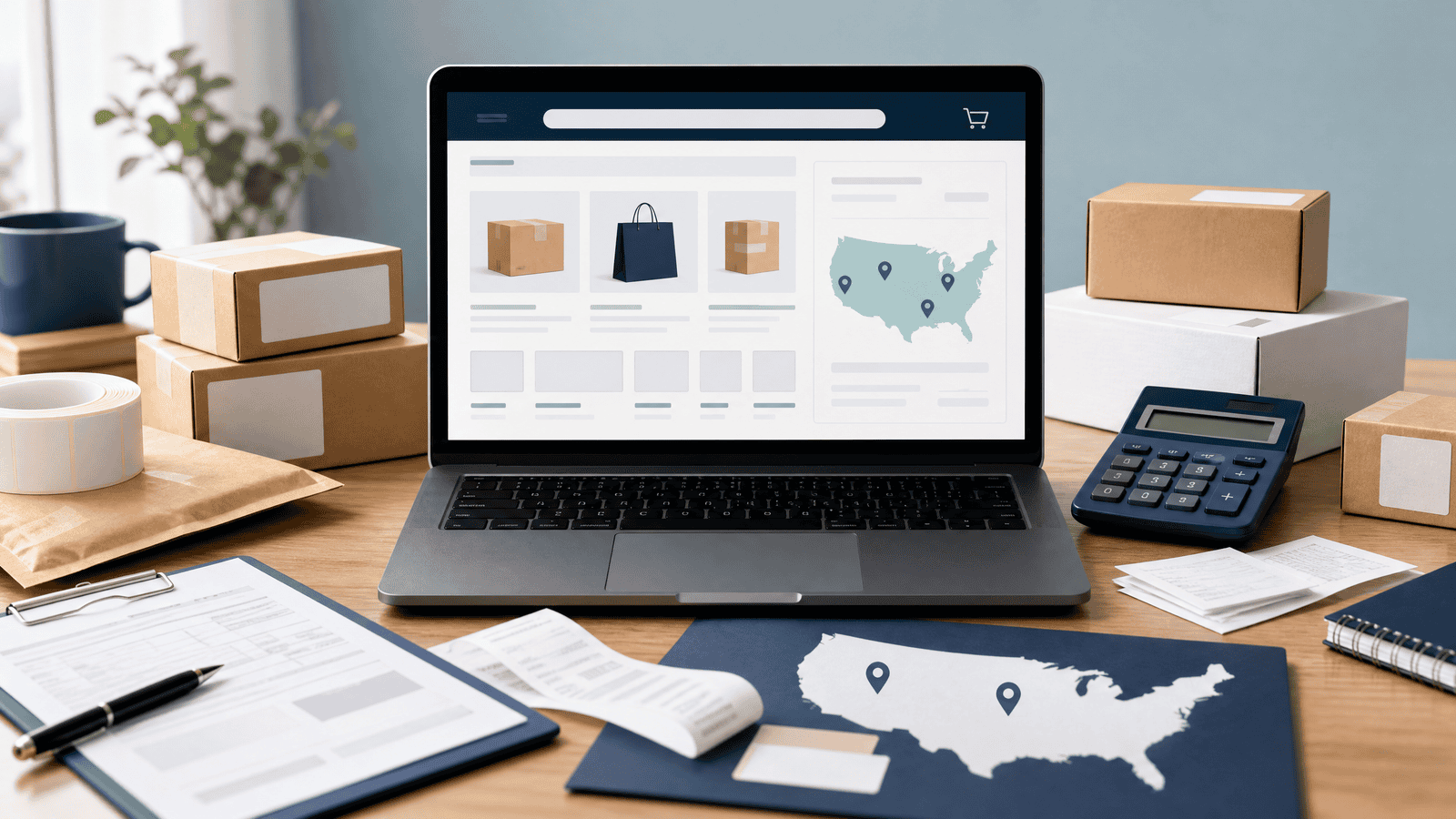
A common question for sellers is: if a marketplace charges sales tax to the buyer, does the seller still have responsibilities? The answer depends on the state, the sales channel, the seller’s physical presence, whether the marketplace collects tax, and the seller’s direct sales.
Many states require marketplace facilitators to collect and remit tax on sales made through their platforms. That can remove one checkout task for a marketplace seller, but it does not always remove registration, income or business-tax reporting, recordkeeping, or obligations for sales made outside the marketplace.
Washington says a marketplace seller may need to register when combined gross receipts sourced or attributed to Washington exceed its threshold. It includes sales through a facilitator, a seller’s own website, and other channels in that threshold review. Colorado says a marketplace seller generally does not collect state sales tax on products sold through a marketplace facilitator, but a multichannel seller must collect on its own website or store sales.
This article explains the typical workflow and does not replace state law or professional advice. It is general information, not a personalized compliance decision.
Table of Contents
Who Usually Collects Sales Tax on Amazon and eBay?
A marketplace facilitator is a business that provides a physical or electronic marketplace where third-party sellers offer products or services. Depending on state law, the facilitator may list products, process payments, provide customer support or fulfillment, and collect and remit sales tax.
For the rules on who collects and remits in those sales, see Marketplace facilitator sales tax.
When a facilitator is required to collect, the buyer may see sales tax charged at checkout even though the seller does not add the tax at the point of sale. The marketplace then reports and remits the collected amount according to state procedures.
Facilitated sale
A facilitated sale is completed through the marketplace platform. The seller supplies the product or service while the platform handles parts of the transaction. Under state law, the facilitator may be the party responsible for sales-tax collection.
Direct sale
A direct sale is completed on the seller’s own website, at a store, via catalog, or through another channel not covered by the facilitator’s collection. The seller must review registration and collection obligations for that channel.
Collection certificate or report
Some states or marketplaces provide a certificate, monthly report, or other documentation showing that tax was collected. Keep that document with the order and tax records. Massachusetts says a marketplace seller can generally rely on a marketplace facilitator collection certificate for facilitated sales when the required conditions are met.
Collection does not mean tax-free
Having tax collected at checkout means the customer paid sales tax and the facilitator handled the collection and remittance. It does not mean the underlying sale should be omitted from all seller records or from other tax and reporting obligations.
Marketplace-Facilitated Sales Versus Direct Sales
Sellers should keep separate records for each sales channel even when the marketplace collects tax.
| Sales channel | Main review question | Record to keep |
|---|---|---|
| Amazon or eBay marketplace | Did the facilitator collect and remit for the destination state? | Marketplace tax report and order export |
| Seller’s own website | Does the seller have nexus or another collection duty? | Address, rate, tax calculation and return record |
| Physical store | Does the store have local registration and collection duties? | POS report and location record |
| Trade show or special event | Does the event create a permit or collection duty? | Event location and tax records |
| Wholesale or resale sale | Is a valid exemption or resale certificate available? | Certificate and buyer details |
Colorado refers to a seller that sells through a marketplace and its own website or store as a multichannel seller. Under Colorado guidance, the seller must collect and remit sales tax on its own shop or website sales while marketplace-facilitated sales are handled by the marketplace according to the state’s rules.
Why a seller’s own website changes the review
A marketplace’s collection responsibility does not automatically cover sales on an independent website. Track website orders by destination and compare totals against the state’s remote-seller threshold.
What if the seller uses more than one marketplace?
Combine Amazon, eBay, and other channel data as the state’s threshold rule requires. Do not assume each platform is measured separately. Washington says its threshold calculation can include sales through a facilitator, the seller’s own website, and other channels.
What if the marketplace does not collect?
If the facilitator is not required to collect, the seller may need to review its own duty. Check the state guidance, the marketplace contract, buyer location, product taxability, and registration thresholds.
When an Online Seller May Still Need to Register
A seller can have a filing or registration obligation even when a marketplace collects tax on facilitated orders.
Physical presence
Inventory, employees, offices, stores, representatives, or other activities can create physical nexus. The cited marketplace guidance says a seller with physical presence is generally required to register in the state regardless of sales amount, subject to the state’s law and exceptions.
Economic nexus
A state can require an out-of-state seller to register after its sales into the state reach a threshold. The amount, measurement period, included sales, and the date used to measure sales vary by state.
Direct website sales
If the seller crosses a threshold through direct website sales, it may need to register and collect even though a marketplace handles a different set of orders.
Business or gross-receipts taxes
States can impose business, occupation, income, or other reporting duties separate from sales tax. Washington says a marketplace seller may still need to report B&O tax even when the facilitator collects retail sales tax.
Proof that the facilitator collected
If a seller relies on marketplace collection, keep proof. Washington says a seller that makes all retail sales through a facilitator may not need to collect and submit retail sales tax if it has proof that the facilitator is doing so, but other tax duties can remain.
Massachusetts example
Massachusetts uses a $100,000 calendar-year threshold for remote sellers in its guidance. It explains facilitator collection and seller certificates. This example illustrates why a seller should read each state’s specific guidance rather than apply a single national assumption.
How to Check Marketplace Tax Reports
A monthly reconciliation can catch missing orders, refunds, and direct-channel exposure.
- Export gross orders from Amazon, eBay, and other marketplaces.
- Separate facilitated orders from direct website and store orders.
- Group each order by destination state and transaction date.
- Compare marketplace tax charged with the marketplace’s remittance report.
- Record refunds, cancellations, exempt sales, and chargebacks.
- Add direct sales to the state-threshold worksheet.
- Save collection certificates, rate reports, and state notices.
- Send exceptions to the reviewer before filing a return.
Suggested reconciliation table
| Column | Example use |
|---|---|
| Order ID | Match the order to the platform report |
| Channel | Amazon, eBay, website or store |
| Destination state | Nexus and rate review |
| Gross amount | Threshold and return reporting |
| Tax charged | Customer-facing tax line |
| Tax remitted by facilitator | Platform collection evidence |
| Refund amount | Corrected revenue and tax |
| Direct-sale flag | Seller collection review |
| Source file | Audit trail |
| Review date | Keeps the record current |
What to do with facilitated sales on a return
Return treatment varies by state. Some states ask for gross sales on the return with a deduction for facilitator-collected sales. Others use a different reporting field or may not require a seller return when all conditions are met. Follow the state return instructions and keep the platform report.
Do not rely on one payout amount
A marketplace payout can be reduced by fees, refunds, advertising, shipping, or reserves. It is not automatically the same as gross sales or taxable sales. Compare order-level data with the payout and the tax report.
State Examples and Important Exceptions
Washington
Washington says marketplace sellers may need to register when combined gross receipts sourced or attributed to Washington exceed $100,000 or when another condition applies. The state says the threshold can include retail sales through a facilitator, the seller’s own website, and other channels, and that physical presence can require registration below the threshold.
If all sales are through a facilitator, Washington says the seller may not need to collect and submit retail sales tax if it has proof the facilitator is doing so. The seller can still have B&O and other reporting duties.
Colorado
Colorado says marketplace sellers generally do not need to collect and remit state sales tax on products sold through a marketplace facilitator under its guidance. It distinguishes direct website or store sales for multichannel sellers.
Massachusetts
Massachusetts uses a $100,000 calendar-year threshold for remote sellers and marketplaces in its guidance. It explains that marketplace facilitators collect tax for facilitated sales and that a marketplace seller may rely on a collection certificate for those sales when the conditions are satisfied.
General multistate caution
The cited marketplace guidance says state laws control and that a marketplace seller may also be a remote seller. A seller that makes both marketplace and direct sales must review the state threshold and registration process for each jurisdiction.
These examples are not a 50-state rulebook. They illustrate why the seller’s spreadsheet should include one row per state, one source URL, and one review date.
Common Questions About Amazon and eBay Sales Tax
Does Amazon always collect sales tax for sellers?
No universal answer applies to every state, product, or transaction. Marketplace laws often require collection, but state definitions, thresholds, and seller duties vary.
Does eBay sales tax work the same way as Amazon sales tax?
Both platforms can act as marketplace facilitators when state law requires collection, but sellers should verify platform reports and state-specific rules. Do not assume identical reporting or certificate formats.
Do I need a sales-tax permit if Amazon collects tax?
Maybe. Physical presence, direct sales, business taxes, marketplace documentation, and state thresholds can still create a registration duty.
Do marketplace sales count toward economic nexus?
They can. Washington says marketplace and other channel sales can be included in its threshold review. Other states must be checked individually.
Do I collect sales tax on my own website?
If your business has nexus or another legal duty in the destination state, you may need to register and collect. The marketplace’s collection does not cover your independent website automatically.
Should marketplace tax be included in my records?
Keep the gross order, tax amount, refund, facilitator report, and payout reconciliation. A marketplace collection report supports the seller’s review.
What if I sell only through Amazon or eBay?
A seller with no physical presence may have fewer sales-tax collection tasks when the facilitator is responsible, but state registration, business-tax, threshold, and recordkeeping rules can remain.
What if I sell at a local craft fair too?
A physical event can create a separate permit or collection obligation. Check the state and local event rules.
How do I calculate sales tax for a direct order?
Identify the taxable item, destination, current rate, and any exemption. Then calculate the tax on the taxable price. Use the state’s rate lookup and keep the source.
Can a sales-tax calculator tell me whether I must register?
No. A calculator can estimate tax after the correct rate and taxable base are known. Registration requires a nexus and a review of state law.
The most reliable workflow is to separate marketplace and direct orders, keep the platform’s collection reports, monitor each state’s threshold, review physical presence, and document every decision. A marketplace may collect tax for a facilitated sale, but the seller remains responsible for understanding its full business picture.